Recorded patterns vs predictions
How an entry, a pattern and an estimate differ, with a worked example and simple ways to read your own record without reading too much into it.
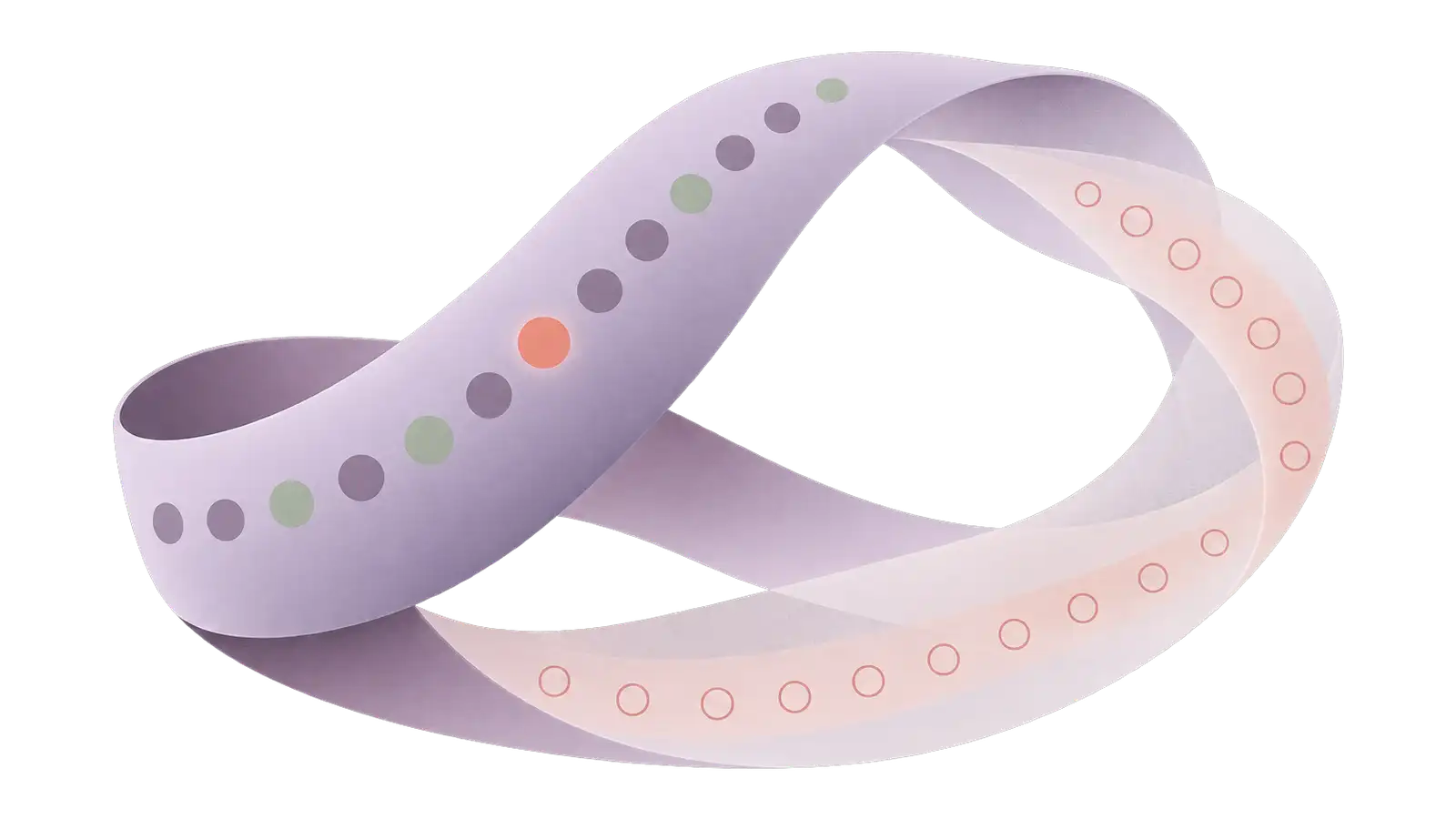
A calendar can show a period you’ve logged and a period that hasn’t happened yet in almost the same colour. Add a symptom next to either one, and it’s easy to read more certainty into the screen than the information supports.
Three labels help. An entry is something you entered. A pattern describes links between those entries. An estimate suggests what might happen next. Each one can be useful. They answer different questions, and none should quietly stand in for another.
An entry records what you put in
“Headache on 30 September” is an entry. It tells you that a headache was logged for that date. A note like “started after lunch” adds context you might otherwise forget.
It doesn’t show why the headache happened. It also doesn’t tell you if you had headaches on the days you left blank. Even a date you entered with confidence is your record of what you felt. It isn’t a separate measurement by the app.
This isn’t a reason to doubt your experience. It just keeps the information honest. You can know you felt unwell without knowing why, and a good record can keep exactly that.
A pattern describes the entries you have
Take this made-up history. For this example only, we’re looking for lower-energy entries in the four days before each logged period start.
| Logged period start | Energy entry before it | Matches the example rule? |
|---|---|---|
| 4 August | 2 August: steady energy | No |
| 2 September | 31 August: lower energy | Yes |
| 4 October | 30 September: lower energy | Yes |
Those entries support this sentence: “You logged lower energy before 2 of your last 3 recorded periods.” The four-day window is just how we counted for this example. It isn’t a rule of the body, or a definition of when anyone should feel tired.
Notice the word “logged”. The August record doesn’t prove that you never had lower energy that month. The example has one steady-energy entry, not a full account of every day.
A pattern isn’t a cause
The table links dates and entries. It doesn’t measure hormones, rule out other influences, or explain why those two lower-energy entries happened. Counting a link can’t do those jobs on its own.
Maybe you recall that one of those weeks also had poor sleep. If it matters to your story, write it down. The extra note still doesn’t prove a reason. It gives you one more piece of context to talk about.
Compare two possible summaries: “I recorded lower energy before two periods” and “My cycle makes me unable to work before every period.” The first stays within the example. The second adds a cause, a claim about every period and an effect the records never showed.
The Office on Women’s Health explains that cycle timing can differ between people and from month to month. Your own record isn’t a timetable for anyone else. See its menstrual cycle guide.
An estimate looks forward
“Next period: estimated 1–5 November” is different from anything in that table. It’s about days that haven’t become logged history yet. The word “estimated” should stay attached to the dates wherever you see them.
You might use the window as a reminder to put period products in your bag. If your period comes outside it, that doesn’t mean you logged badly. It means the estimate and what happened were different.
An estimate shouldn’t quietly turn into a recorded period when its dates pass. Until you enter what happened, the record should keep the forecast and your experience apart. Otherwise, later summaries may seem to rest on history you never reported.
Check the sample before trusting the summary
You don’t need to be a statistician to ask a pattern a few practical questions:
- Which entries does it include?
- What does “before” mean in this example?
- How many recorded periods does it count?
- Are there gaps in the record?
- Did I change how I used a label?
For example, maybe “lower energy” first meant wanting an early night, but later meant needing to leave work. A count can lump those entries together, even though you meant different things. A short note about the change may help more than another decimal place on a chart.
You can also check the count by reading the entries behind it. In our example, changing the September entry from lower to steady would leave one matching period, not two. Any summary of that edited record would need to change too.
More entries don’t remove every uncertainty
A longer record gives you more days to look at. But missing information doesn’t become a known fact just because the calendar is fuller. If you tend to log on hard days, the record may say much more about those days than about the days in between.
This is about how you read the record. It isn’t a personal failing. You can describe a record’s limits without deciding it’s worthless. “I logged when it bothered me, so this isn’t every time it happened” is a clear note to bring along.
A neat chart doesn’t diagnose a condition either. Even lab results need to be read alongside a person’s history and other medical information, as MedlinePlus explains. A symptom chart can’t replace that assessment.
Turn the pattern into a useful question
Put the example and the uncertainty together: “I recorded headaches near these two period starts. I didn’t log every day, and I’m not sure they’re connected.” That gives a healthcare professional something concrete to ask about. It doesn’t present a diagnosis as settled.
When you prepare for a visit, MedlinePlus suggests describing your symptoms and when they happen. You can also write down what you want to understand, so you don’t have to remember it during the appointment. See Talking With Your Doctor.
You don’t need to find a pattern before you ask for help. If your periods become irregular or your usual pattern changes, the NHS advises talking to a GP. You don’t need an app to spot a repeated link first. See Irregular periods.
Read the label before the date
Ruva keeps logged entries, patterns in those entries and future estimates apart. The sample previews on this website show that separation. They aren’t evidence about your own cycle.
When you read any tracking screen, start with the kind of information it shows. “Logged”, “pattern” and “estimated” are small words that save a lot of guesswork. None of them turns an app into a diagnosis, a confirmation of ovulation or a form of contraception.
Sources
- Your menstrual cycle, Office on Women's Health
- Irregular periods, NHS
- Talking With Your Doctor, MedlinePlus
- How to Understand Your Lab Results, MedlinePlus
Keep reading
-

-
-



Browse more guides about your cycle, the full Learn library, or common questions about periods and Ruva.